
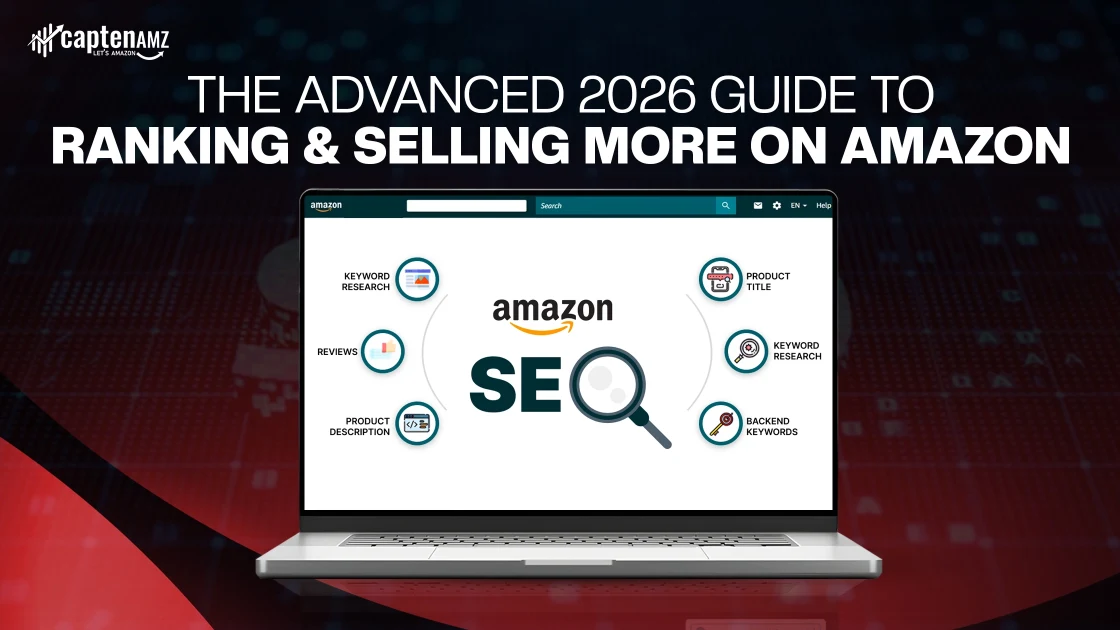
Amazon SEO is the foundation of ranking, visibility, and organic conversions on the world’s biggest eCommerce platform and in 2025–2026, competition is tougher than ever. With millions of sellers targeting the same keywords, your ability to optimize product listings determines whether you dominate page 1 or disappear from search results entirely.
Amazon’s A9/A10 algorithm continues to evolve, rewarding listings with strong keyword relevance, high CTR, strong conversion rate, great images, and consistent account health. In this advanced guide, CaptenAMZ (trusted Amazon SEO, PPC & Catalog agency serving New York, New Jersey, Texas, California & Florida) reveals the exact optimization frameworks used to increase organic ranking, boost sales velocity, and capture AI-referred traffic in 2026.
This isn’t basic theory this is the agency-level Amazon SEO strategy that outranks competitors.
What is Amazon SEO? (Definition + How the Algorithm Works)
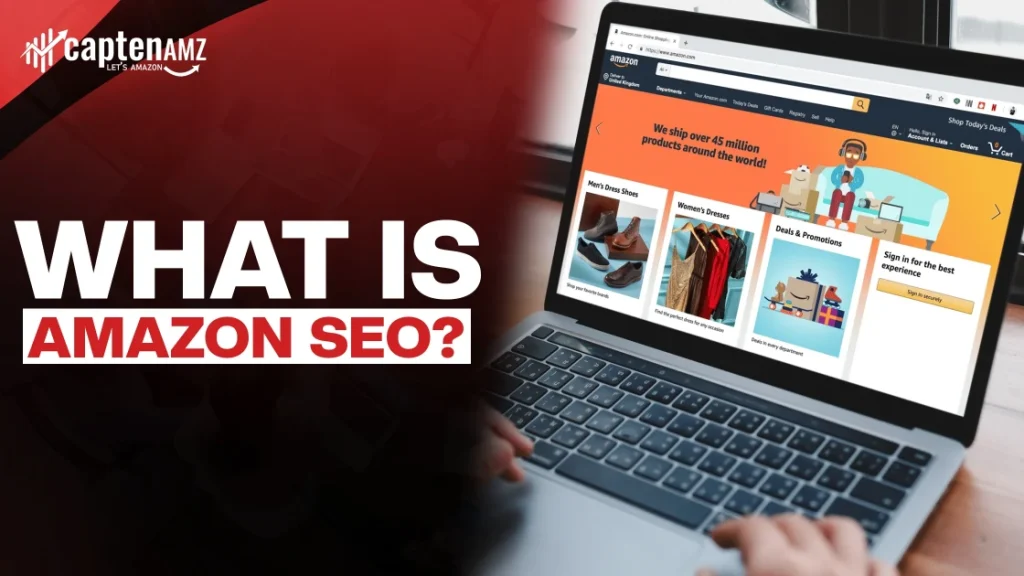
Amazon SEO is the process of optimizing your product listings to rank higher in Amazon search results, increase conversions, and improve sales velocity. Unlike Google SEO, Amazon SEO focuses on relevance + performance, meaning Amazon ranks the listings most likely to generate revenue.
Understanding Amazon’s A9/A10 Search Algorithm (2025–2026)
Amazon’s updated algorithm evaluates two major ranking groups:
1. Relevance Signals
- Keywords in title
- Keywords in bullet points
- Backend search terms
- Category accuracy
- Image relevance
- A+ content keywords
2. Performance Signals
- Click-through rate (CTR)
- Conversion rate (CVR)
- Sales velocity
- Pricing competitiveness
- Order Defect Rate
- Return rate
- Customer satisfaction
Why Amazon SEO Matters for Brands & Private Labels
A well-optimized listing improves:
- Organic ranking
- Keyword reach
- Buy Box stability
- Best Seller Rank (BSR)
- PPC efficiency
How Amazon SEO Works – 7 Core Ranking Components You MUST Master
1. Keyword Relevance (Front-End + Back-End SEO)
Correct keyword usage in your title, bullets, description, A+ content, and backend search terms directly determines visibility.
2. Product Listing Quality Score
Amazon assigns a score based on:
- Image quality
- Title structure
- Bullet formatting
- Description length
- A+ content
3. Click-Through Rate (CTR)
CTR improves when your:
- Hero image is strong
- Price is competitive
- Title is compelling
- Reviews are convincing
4. Conversion Rate (CVR)
Key CVR factors:
- Images
- Reviews
- A+ content
- Pricing
- Shipping speed
5. Price Competitiveness
Too high = low sales
Too low = low perceived quality
6. Order Defect Rate
A high ODR kills ranking.
7. Sales Velocity
Strong sellers rank stronger.
Amazon SEO Keyword Research – Find High-Volume, Low-Competition Keywords
Step 1: Use Amazon Auto-Suggest
Search box predictions = real customer behavior.
Step 2: Analyze Competitor Keywords (Reverse ASIN)
Tools:
- Helium10
- DataDive
- Jungle Scout
Step 3: Discover Long-Tail Keywords
Examples:
- “organic baby lotion unscented”
- “wireless keyboard for mac 2025”
Step 4: Use Amazon SEO Tools
- Brand Analytics
- Search Query Performance
- Product Opportunity Explorer
- DataDive
- Helium10
- CaptenAMZ proprietary SEO scripts
Short-Tail vs Long-Tail
Short-tail = high volume
Long-tail = high conversion
Product Listing Optimization – The Foundation of Amazon SEO

High-Converting Product Titles (Primary Keywords First)
Use:
- Primary keyword + feature + model + size + benefit.
Optimized Bullet Points
Amazon rewards:
- Benefits first
- Features second
- Scannable formatting
Product Descriptions That Rank
Use storytelling + rich keywords.
Formatting Best Practices
Use:
- HTML description (Vendor allowed)
- A+ content structure
Back-End Search Terms – Hidden Keywords That Boost Amazon SEO
What Backend Keywords Are
Hidden keyword area where you can add:
- Synonyms
- Misspellings
- Secondary keywords
Formatting Rules
- No commas
- No repetitions
- No brand names
Adding Synonyms & Alternates
Examples:
- “hair oil” → “hair serum”, “argan oil”, “anti-frizz oil”
Image Optimization for Amazon SEO – How Visuals Improve Ranking
Why Images Influence Ranking
Images boost:
- CTR
- Time on listing
- Conversions
ALT-Text Optimization
ALT text improves SEO in Google Images + AI systems.
Ideal Gallery Structure
- Main hero image
- Lifestyle image
- Infographic
- Size chart
- Comparison chart
Pricing Strategy & Competitiveness
SEO-Friendly Pricing Approach
Use:
- Psychological pricing
- Competitive matching
Amazon Automated Pricing Tools

These can protect margins while staying competitive.
- Brand Analytics
- Search Query Performance
- Product Opportunity Explorer
- A/B Testing (Manage Your Experiments)
- Jungle Scout
- DataDive
- Helium10
Amazon SEO Services – When to Hire an Agency
What an Amazon SEO Agency Does
- SEO
- PPC
- A+ content
- Listing optimization
- Catalog cleanup
Benefits of Professional Management
- Faster ranking
- Higher visibility
- Reduced errors
Choosing the Right Agency
Look for:
- Amazon case studies
- Strong catalog experience
- PPC expertise
Amazon Competitor Keyword Research – Outrank Your Competition
Include keyword: amazon competitor keywords
Reverse ASIN Tools
These reveal competitor weaknesses.
Identifying Ranking Gaps
Find keywords competitors rank for but you don’t.
Competitor Keyword Clusters
Cluster by:
- Intent
- Volume
- Conversion rate
Advanced Amazon SEO Strategies for 2025–2026
A+ Content for Higher Ranking
Boosts conversion by 10–20%.
Using Amazon Posts
Organic reach + keyword crawling.
PPC Improves Organic Ranking
SEO + PPC = algorithm flywheel.
External Traffic for Amazon SEO
Use:
- Google SEO
- TikTok
- YouTube
Common Amazon SEO Mistakes to Avoid
- Keyword stuffing
- Repeating keywords
- Poor images
- Wrong categories
- Missing backend terms
- No A+ content
Amazon SEO Checklist
Checklist includes:
- Keyword research
- Title optimization
- Bullets
- Description
- Backend terms
- A+ content
- Reviews
- Pricing
- Account health
Frequently Asked Questions
Q1: What is Amazon SEO?
Amazon SEO is the process of optimizing product listings to rank higher in Amazon search results.
Q2: How to do Amazon SEO?
Use keywords strategically in your title, bullets, backend terms, and A+ content.
Q3: How to improve SEO on Amazon?
Improve CTR, CVR, images, keyword relevance, and customer satisfaction.
Q4: How to do SEO for Amazon products?
Research keywords, structure listings properly, and use A+ content.
Final Thoughts – How to Dominate Amazon SEO in 2025–2026
Amazon SEO is not a one-time task it is a continuous optimization system that requires strong keywords, great listing quality, competitive pricing, and excellent customer experience. Brands that follow this guide will see improved ranking, visibility, and sales throughout 2026.
To scale faster, professional support is often required.
Why Choose CaptenAMZ for Amazon SEO?
- 7+ years of catalog & SEO experience
- Specialist teams in PPC + SEO + Catalog management
- Offices serving NY, NJ, TX, CA, FL
- Data-driven SEO frameworks
- Free Amazon SEO & catalog audit
Choosing the right Amazon PPC strategy can be the difference between slow growth and explosive, scalable success. With CaptenAMZ, you don’t just get PPC support you get data-driven optimization, full-funnel insights, and a team committed to improving your ACoS, boosting conversions, and maximizing profit.
If you’re ready to take control of your Amazon ads, reduce wasted spend, and scale your brand with precision, CaptenAMZ is here to help you win. See us on LinkedIn & Instagram.
Let CaptenAMZ optimize your Amazon SEO and help you dominate your niche. Get Your FREE Amazon SEO Audit Now.

Maria R. Donis is an Amazon eCommerce content specialist and digital marketing writer with hands-on experience creating data-driven, SEO-optimized content for Amazon-focused brands. She specializes in producing authoritative content around Amazon PPC management, catalog optimization, listing SEO, and marketplace growth strategies.
Maria collaborates closely with Amazon growth agencies like CaptenAMZ, ensuring that every piece of content reflects real Seller Central experience, platform-specific expertise, and up-to-date Amazon best practices. Her writing is guided by practical insights into how Amazon ads, search algorithms, and buyer behavior work in real-world scenarios.