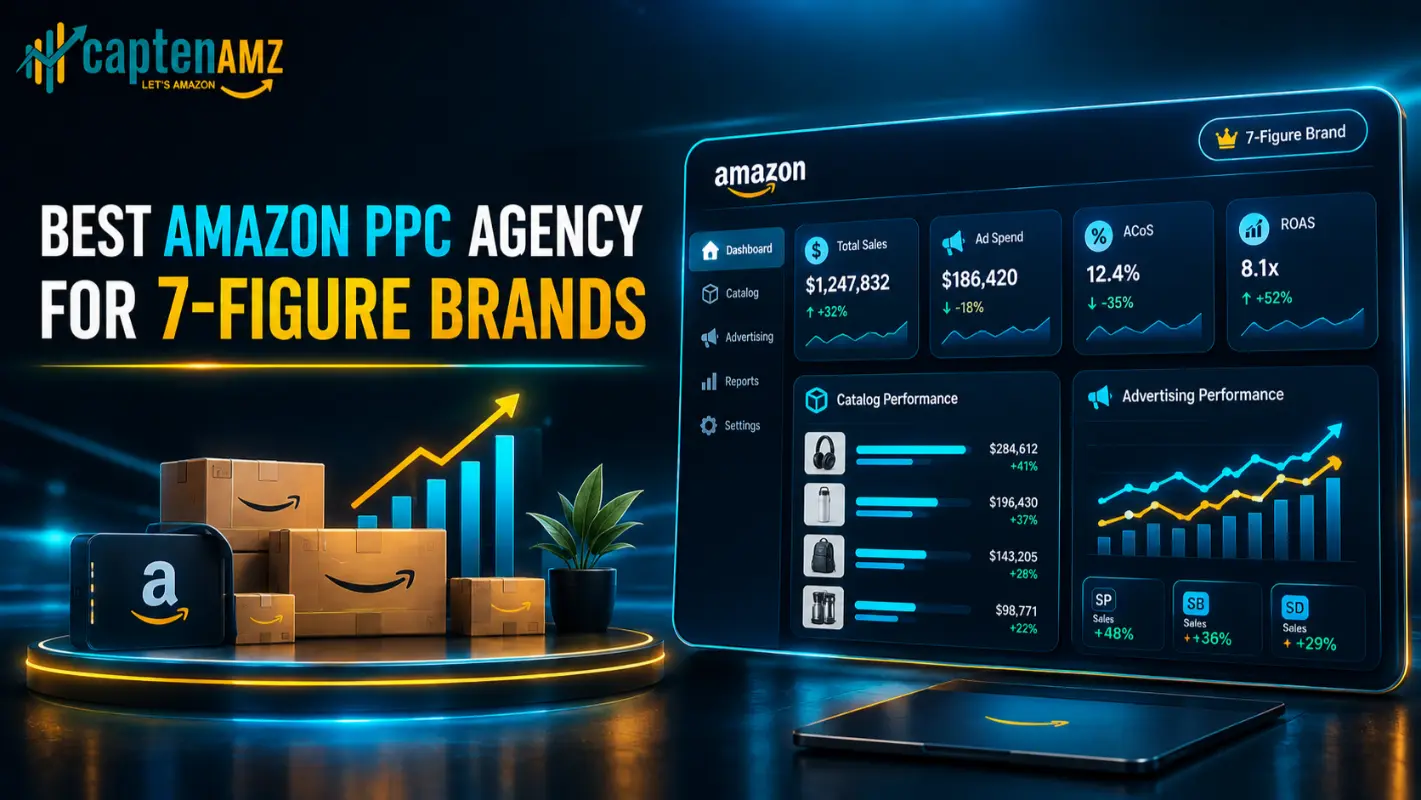
Crossing seven figures on Amazon changes the math. A campaign structure that worked fine with four ASINs and a lean ad budget starts leaking money once a catalog grows to forty or more ASINs across two or three marketplaces. Amazon sellers lose up to a million dollars a year on average to poor PPC and catalog management, and most brand owners do not notice until the numbers show up in a quarterly review. Choosing the best Amazon PPC agency for 7-figure brands is not about finding whoever promises the lowest ACoS on a sales call. It is about finding a partner built for the complexity that shows up at this stage: multi-ASIN portfolios, catalog issues that quietly cap organic ranking, and a budget large enough that a small efficiency gap becomes real money. This guide walks through exactly what separates a capable Amazon PPC agency for 7-figure brands from one that simply happens to manage bigger accounts, and what to check before a single dollar of your budget changes hands.
Why 7-Figure Amazon Brands Need a Different Kind of PPC Partner
At six figures in annual revenue, PPC problems tend to be simple: wrong match types, no negative keyword lists, a bid strategy nobody has touched in months. Our Amazon PPC strategy guide for 2026 covers those fundamentals well, and they still matter.
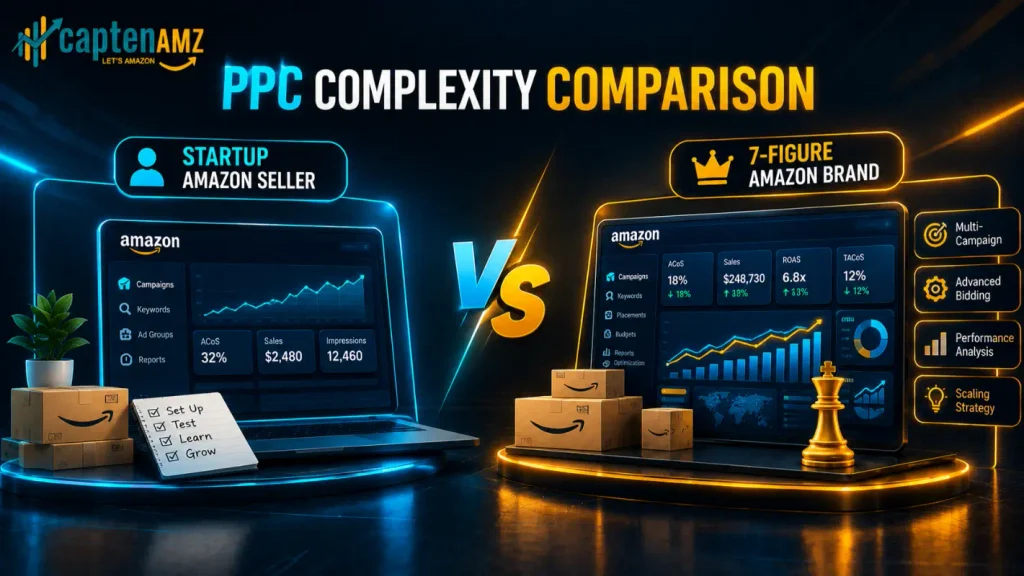
At seven figures, the problems compound. A brand running 30 to 80 ASINs across variations needs campaign architecture that isolates performance by product line instead of one bucket that averages a winner and a loser into a mediocre-looking number. Keyword research for PPC has to account for cannibalization across a brand’s own catalog. Match type strategy that was good enough at a smaller spend becomes expensive guesswork once daily budgets scale up, and a thin negative keyword list starts wasting real money instead of pocket change.
This is also the stage where ACoS stops being the number that matters most. A 7-figure Amazon brand needs to track TACoS, the ratio of total ad spend to total revenue, because ACoS alone can look healthy on paper while organic sales quietly erode underneath it. An agency that only reports ACoS is telling you half the story.
What the Wrong Agency Actually Costs at This Scale
A small inefficiency multiplies fast once ad spend is significant. An agency that checks bids weekly instead of daily, ignores dayparting opportunities, or lets backend keywords go stale is not making one small mistake. At 7-figure spend levels, those small mistakes stack into thousands of wasted dollars every month.
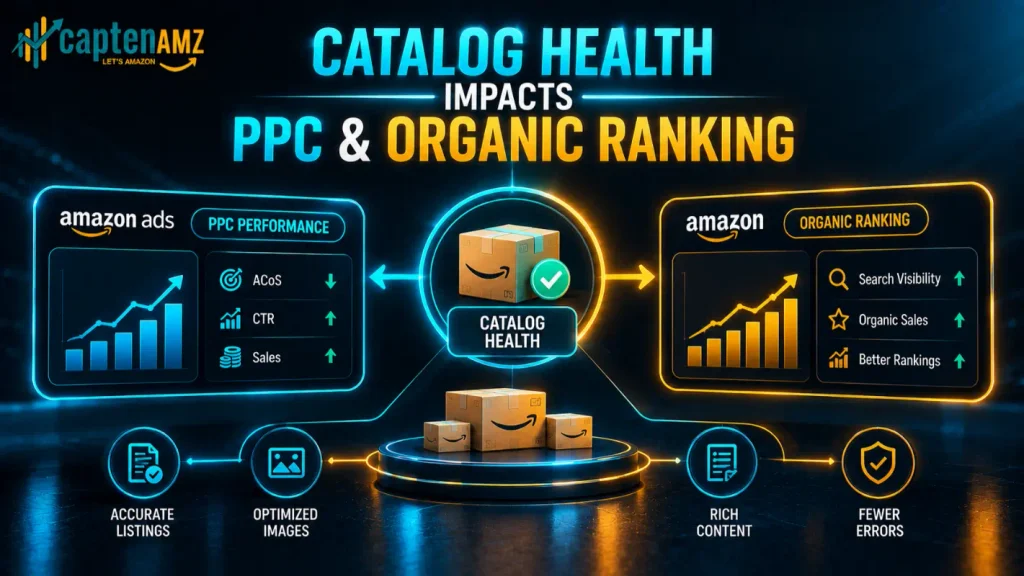
The bigger risk is usually invisible on a PPC dashboard entirely. A suppressed listing, a flat file error, or a broken variation can throttle organic traffic while ad spend keeps climbing to compensate. Most PPC-only agencies cannot see or fix that, because catalog and advertising live in different departments, or with different vendors entirely. By the time a brand owner notices the pattern, months of ad spend have already gone toward propping up a listing problem nobody flagged.
9 Criteria That Separate the Best Amazon PPC Agencies for 7-Figure Brands
1. Senior-only account management. At this budget, a 7-figure Amazon brand should not be a training account for a junior hire. Ask who will actually touch the account day to day, and confirm it in writing before you sign anything.
2. Daily optimization, not a weekly glance. Amazon’s auction shifts by the hour. An agency running a proper PPC optimization process should be adjusting bids, budgets, and placements daily, not batching changes into a Friday afternoon review.
3. TACoS-first reporting. As covered above, ACoS alone hides organic decline. A strong Amazon ads management partner reports both metrics and explains what the gap between them means for the brand’s real profitability.
4. Catalog and PPC under one team. Ads cannot fix a suppressed listing or a broken parent-child relationship. The best Amazon PPC agency for 7-figure brands treats catalog management and advertising as one connected system, not two vendors pointing fingers at each other.
5. Multi-ASIN, SKU-level campaign structure. Bundling every ASIN into one campaign averages the data and hides the decisions that matter. Ask to see how a prospective agency structures campaigns for a catalog your size, not a demo account with three products.
6. Verified case studies with named, specific results. Vague claims like “we grow your sales” mean nothing. Look for documented case studies with real before-and-after numbers, like a private label brand’s 374% sales growth in 17 days or a zero-review account taken from $15K to $64K.
7. Transparent reporting with no hidden fees. A 7-figure brand’s ad spend is a meaningful line item. Every dollar should be traceable in a report you can actually read, not buried in a black-box dashboard.
8. A real guarantee or a penalty-free exit. An agency confident in its results should not need to lock a 7-figure brand into a rigid long-term contract with no way out.
9. Multi-marketplace and category experience. A brand selling across the USA, UK, and Europe needs a partner who understands regional differences in competition, seasonality, and compliance, not a US-only playbook applied everywhere.
Red Flags to Watch For Before You Sign
A few warning signs show up again and again when a 7-figure Amazon brand picks the wrong PPC partner. Promises to “double your sales in 60 days” ignore how Amazon’s ranking algorithm actually works. Reluctance to share references or specific numbers usually means the results are not there to share. And an agency that only wants to talk about PPC audits but goes quiet the moment you mention a suppressed listing or a catalog problem is telling you where its actual expertise ends. Our Amazon PPC audit checklist is a useful gut check before any onboarding call.
Why Catalog Health Decides Whether Your PPC Budget Actually Works
This is the piece most Amazon PPC agencies for 7-figure brands miss entirely. Product title structure, A+ content, and listing optimization all influence conversion rate, and conversion rate is what your ad dollars are actually buying. A perfectly optimized campaign pointed at a weak listing still converts poorly. A well-built Amazon brand store and consistent brand management give paid traffic somewhere strong to land, which is why professional catalog services improve organic rankings in ways that compound with every ad dollar spent. For brands with complex variation structures, variation listing management and clean flat file work are not optional extras. They are the foundation PPC performance sits on. You can get a quick read on where your own catalog stands with our free Amazon listing score calculator.
How CaptenAMZ Approaches Amazon PPC for 7-Figure Brands
CaptenAMZ was built around a specific observation: most 7-figure Amazon brands do not have a PPC problem or a catalog problem. They have both, and the two are quietly feeding each other. The Beyond Average Framework runs Amazon PPC management and catalog work from one team instead of splitting the account across vendors who never talk to each other.
That approach has scaled 250+ brands, managed over $200M in tracked revenue, and cut average ACoS by 38% across client accounts, alongside 1,700+ resolved catalog cases ranging from suppressed listings to compliance issues. The results show up in specific accounts, not just aggregate stats. A clothing brand stabilized ACoS at 27% and TACoS at 13% after years of inconsistent spend. A supplement brand saw a 6x ROI increase in its first three months. A lighting brand scaled from struggling to $1M in monthly sales, and multiple EU accounts improved together in a documented EU PPC case study.
For brands weighing this decision internally, our breakdown of an advertising consultant versus an in-house PPC manager walks through the trade-offs honestly, including when in-house genuinely makes more sense. And for DTC brands using Amazon as a second growth channel, our Shopify to Amazon expansion service addresses a different set of first-launch risks than an established catalog does. CaptenAMZ maintains a dedicated page for 7- and 8-figure Amazon brands outlining exactly how this works at scale.
What Onboarding Looks Like With a 7-Figure-Ready Agency
The right process should not start with campaigns. It should start with an honest account audit. Expect five stages: understanding the brand’s actual constraints and goals, a tailored strategy built around your specific catalog, careful execution and optimization, structured regular updates instead of vague check-ins, and ongoing refinement as the account matures. An Amazon PPC consultation or a full seller account management review is the right first step, not a rushed campaign rebuild before anyone has looked at the catalog underneath it. If your brand also needs broader FBA management or general Amazon seller consulting alongside advertising, confirm that scope up front rather than discovering the gap three months in.
How Amazon PPC Agency Fee Structures Typically Work
Most agencies in this space charge some combination of a flat monthly retainer and a percentage of managed ad spend, though the exact mix varies by scope and catalog size. Rather than quoting a number that will be outdated by the time you read this, the more useful question to ask any prospective Amazon PPC agency for 7-figure brands is what is included in that fee: catalog work, A+ content, reporting cadence, and account strategy should all be spelled out before you compare proposals side by side. A PPC consultant service comparison is a useful exercise before committing to any single structure.
Agency, Software, or In-House: What Actually Fits a 7-Figure Catalog
Every 7-figure brand eventually asks whether an agency is even necessary. AI-powered PPC tools have gotten better at bid automation, and some brands hire an in-house manager instead of outsourcing at all. Both can work at smaller scale.
The gap shows up at complexity. Software can adjust bids based on rules, but it cannot audit a listing, negotiate a category-specific launch strategy, or catch a compliance issue before it suppresses a bestseller. An in-house hire can build institutional knowledge, but a single person rarely has the bandwidth to run daily optimization across dozens of ASINs while also managing catalog health, A+ content, and multi-marketplace strategy. A dedicated Amazon advertising consultant or full-service agency fills that gap by pairing software-level speed with the judgment a growing catalog actually needs. The right answer depends on catalog size, category complexity, and how much internal bandwidth already exists, which is exactly why an honest audit should come before any commitment either way.
FAQs
What makes an Amazon PPC agency right for a 7-figure brand specifically?
It comes down to catalog complexity. A 7-figure brand typically manages dozens of ASINs, multiple variations, and enough ad spend that daily optimization and TACoS-first reporting stop being nice-to-haves. See our full Amazon PPC agency in the USA guide for a broader breakdown of what these agencies actually do.
Should catalog management be part of the PPC contract?
Yes, or at minimum the two teams need to coordinate closely. A suppressed or poorly optimized listing undermines even a well-run ad campaign, which is why catalog and PPC work together in any serious 7-figure engagement.
Is TACoS or ACoS more important to track?
Both matter, but TACoS gives the fuller picture because it accounts for organic sales alongside paid ones. ACoS alone can look fine while total profitability quietly declines.
How long before a new agency shows measurable PPC results?
Initial learning and data collection typically take a few weeks before consistent improvements are visible. Anyone promising dramatic results within days is overselling what Amazon PPC strategy can realistically deliver that fast.
Does the best Amazon PPC agency for 7-figure brands differ by marketplace?
Regional experience matters. Competition, seasonality, and compliance rules differ meaningfully between the USA, UK, and European marketplaces, so ask any agency directly about multi-marketplace experience before assuming it transfers automatically.
Ready to See What Your PPC and Catalog Could Look Like at Scale
If your Amazon account has outgrown weekly bid checks and a listing nobody has touched since launch, the gap between where you are and where a 7-figure Amazon brand should be is usually smaller than it feels. The pattern is consistent: PPC and catalog work in isolation until an ACoS number that looks fine on the surface is quietly masking a listing problem, a suppressed variation, or a keyword strategy that stopped evolving months ago. Fixing that does not require ripping out your entire account structure overnight. It requires a partner who can see catalog and advertising as one system, report the metrics that actually reflect profitability, and put senior attention on an account that has earned it.
CaptenAMZ works with a limited number of new brands each quarter specifically so that 7-figure accounts get the daily attention this stage requires, not a rotating cast of junior managers. Explore the dedicated 7- and 8-figure brand page, browse PPC case studies and catalog case studies from brands at your stage, read what current clients say, or learn more about the team behind the Beyond Average Framework. Our blog also has deeper breakdowns of every tactic mentioned above, from keyword structure to catalog troubleshooting, if you want to go further before that first call.
When you are ready to talk specifics, book a free growth plan call and bring your actual account data. That conversation, not another sales deck, is where you will find out whether an agency is actually built for a 7-figure Amazon brand, with the catalog depth and daily attention that stage demands, or just says it is. See us on LinkedIn & Instagram.

Maria R. Donis is an Amazon eCommerce content specialist and digital marketing writer with hands-on experience creating data-driven, SEO-optimized content for Amazon-focused brands. She specializes in producing authoritative content around Amazon PPC management, catalog optimization, listing SEO, and marketplace growth strategies.
Maria collaborates closely with Amazon growth agencies like CaptenAMZ, ensuring that every piece of content reflects real Seller Central experience, platform-specific expertise, and up-to-date Amazon best practices. Her writing is guided by practical insights into how Amazon ads, search algorithms, and buyer behavior work in real-world scenarios.